The mental and physical well-being of our horses and other animals is just as important to us as our own.
Animal welfare often focuses on physical health, nutrition and veterinary care, but we believe there is much more to it than that. It is about overall quality of life, both mental and physical and the lived experience. Life is not perfect. There will always be difficulties that people and animals have to overcome, but with our help, they can learn to be brave, strong, to be resilient and they can have their nutritional and physical needs catered for, their ailments treated and we can help them to improve their mental state.
With good management humans can assist domestic horses to find a level of relaxation and contentment that they might not be able to find by themselves and in return horses can help humans with their own emotional regulation and sense of worth. This amazing symbiotic relationship is very special and must be cherished.
Horses and humans have collaborated for years to build modern society and we are now at a turning point where they are moving away from being beasts of burden towards becoming human companions. Science is helping us to understand more about them than ever and inform the wider public of why the best practices understood by ancient horsemen really work.
As a riding school, open to the public we are in a unique position to not only be able to demonstrate great welfare practices, but also to educate potential new horse owners and the wider public about equine specific needs and how they can identify and resolve negative experiences.
It is enjoyable for us to work with happy horses. Happy horses are healthier, friendlier, and perform better so here at Valley Farm we try to give our horses as many natural aspects to their lives that their herd instinct allows and ensure that our animals enjoy a level of care and enrichment over and above the five freedoms of animal welfare they are entitled to.
Environment
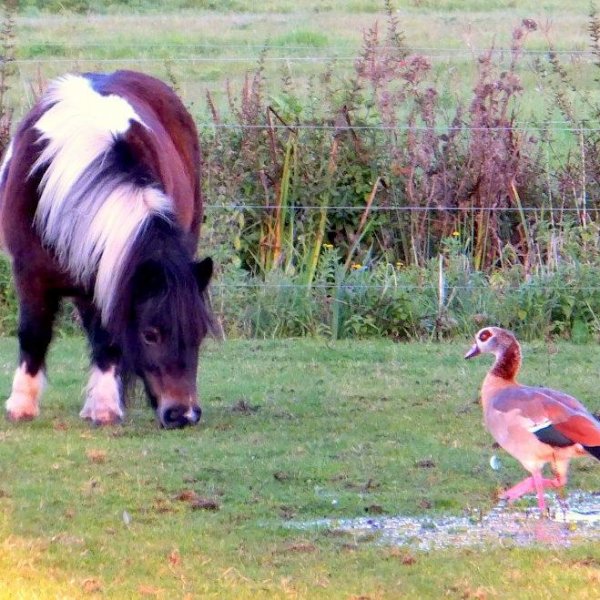
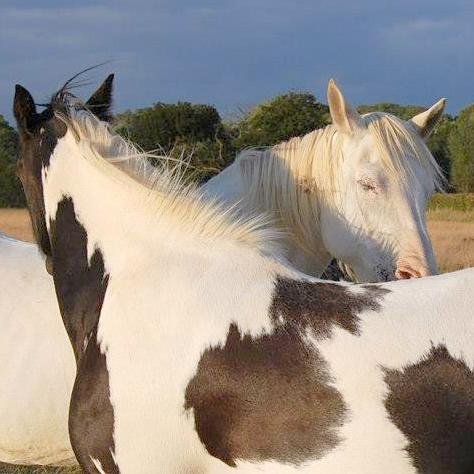
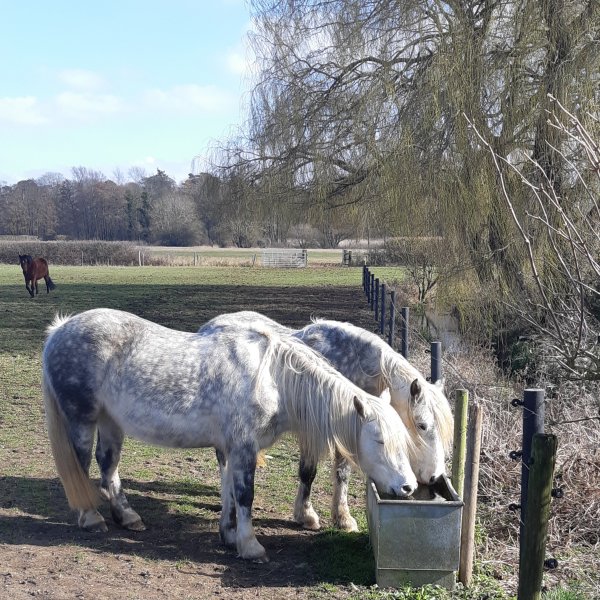
Just like us, horses thrive in a green environment with hedges, trees, wildflowers, rivers, paths and interesting features. We manage the farm for the benefit of the horses, this has the wonderful side-effect of being very beneficial to nature and a beautiful environment for us and for our visitors. All our horses live out in large mixed herds on our eighty acres of grassland. Here they have the freedom to express natural behavior, to browse, to socialise, make friends and interact as a herd. It is a wonderful opportunity for visitors to see and study horses in this environment. Horses are social animals and do not enjoy being kept in stables or being isolated in small paddocks. Our horses have plenty of space to gallop, they are able to play, roll, and interact with their friends every day.
Wild vs. Domestic
Wild horses live in herds. They face many mental and physical challenges daily while seeking out food, water, protection from the elements and keeping safe from predators. They are a highly intelligent social species and are natural problem solvers. Domestic horses sometimes have limited daily routines where a lack of mental stimulation can lead to frustration, spookiness, or behavioral problems. As caretakers of domestic horses it is up to us to provide an environment that not only caters for their survival and social needs but also provides a level of physical challenge and mental stimulation. In addition to daily turnout, a varied schedule incorporating lunging, groundwork and ridden exercises in a variety of disciplines by different riders helps to satisfy this need. Humans benefit from new experiences and challenges, and so do horses. We aim to provide appropriate challenges to help both horses and riders become the best they can be.
In the summer
During the day the working horses are brought in to the stables for health checks and to complete their work schedules and rest in the cool away from flies and midges. The stables have automatic drinkers to allow the horses access to fresh water whenever they require it.
The horses are run in each day as a herd from the fields along the tracks to the stables. On arrival at the yard each horse will go into their own stable and await the staff to come round shutting the doors. As an incentive to come into the stables, each horse has a handful of grass nuts in the corner to locate. Running the horses in each day allows us to see them all moving in order that we can check any that might be unsound, and moving on tracks helps to keep their limbs and feet healthy.
At the end of the working day the horses stable doors are all opened, and they trot off back to the fields. This also serves as a daily fire drill for the animals and staff. Visitors often enjoy watching the herds returning to their fields.
Pasture and Turnout
We believe in maximising turnout time, as this is when the horses have the greatest opportunity to truly live as horses should, surrounded by nature and other animals. Forage, friends and freedom are becoming more widely recognised as being essential to animal welfare. Being outside in large fields allows them freedom of choice as to which herbs, hedgeplants or grasses they require to seek out but also freedom of movement. Not just the freedom to rear, buck, roll and play, but constant movement is much better for their hooves and joints, their digestive system and their mental health. In the wild horses can move up to 100 miles a day looking for food, and they have evolved to thrive on movement and to graze with their heads down. We understand that being out at pasture is one of the best ways to satisfy their social, physical and psychological needs.
Our marshland meadows are bordered with large trees and managed hedges with dykes running between. It is attractive for the wildlife as well as our horses. There is an immense assortment of wildlife living in the reed beds and around the fields including barn owls, little owls, cattle egrets, herons, swans, geese, field fare, skylarks, water vole, otters, bats, kingfisher, deer and many more. The River Deben runs round the property and regularly floods the lower meadows, adding to the diversity.
The upland fields have been recently converted from arable land. The problem with this type of grazing is that most arable conversions have little or no protection from the summer sun or winter sleet. With this in mind, we have planted a hedge (Autumn 2009) right along one side of the field to give protection from north winds and provide shelter from the sun. In addition we have planted a small copse in the middle of the field to give additional shade and shelter. In 2016 we planted a further 1600 trees.
Rotational grazing
In the wild horses range over wide areas exploring new terrain. Regularly rotating our herds onto different pastures helps to prevent boredom as they regularly have a new field to explore. It also allows us to sweep and rest areas as required in order to preserve the meadows and the habitat they provide. This means we can provide fields with an appropriate quantity of grass for the needs of specific horses. Older ponies or thoroughbred horses usually require more grass than younger native type ponies, so we are able to split the herds according to friendship groups and diet requirements. Those needing more restricted grazing follow the herds needing more, once they have grazed it down.
We have a network of tracks connecting the meadows. Not only are these great for hacking and appreciated by visitors and dog walkers, but at night horses with greater movement requirements can be turned out on the tracks to encourage them to keep moving while searching out their food.
All our pastures contain automatic water troughs for a constant supply of fresh water. Our meadows are visible from the house, so we are able to monitor the animals at all times.
In the winter
When the weather is good enough, the horses live out all year round. Horses who are not working on a specific day are returned to the field after they have had their health check and eaten their breakfast in order to maximise their sunlight hours and vitamin D uptake. If the pastures are too wet to be comfortable to sleep outside, the horses are given time to sleep in their stables. If the grass becomes too short we provide additional hay or haylage on the ground, which provides sufficient roughage and maintains a head down eating position, as studies have shown that long term use of haynets isn't good for posture, muscle development or breathing. Our paddocks contain a mix of field shelters or natural shelter from hedges and trees, however if the weather turns too inclement, the horses can be brought into the stables for shelter and to prevent poaching to the grassland.
Winter Exercise
The trouble with stabled horses is that it instantly removes their natural way of herd life. So over the years, if we need to stable the horses overnight, we have endeavored to replicate their herd environment as much as possible for the welfare of our animals. Each day we have an exercise schedule to ensure that no animal is missed out and left standing in its stable. Every animal is exercised either by being ridden and/or loose schooled with others in the indoor arena.
Loose schooling allows them to continue the bonding from the friendship herds which is very important in horses well-being. At the beginning and end of each session the horses are allowed bonding time where they may groom each other, play, roll or just wander about and renew pecking orders or friendships. Loose schooling them in the indoor arena allows us to see them all moving and helps youngsters to let off steam or the oldies to ease arthritic joints. Group rolling helps the horses to feel relaxed and happy with their environment and allows them to have a good old scratch all over.
The indoor arena is ideal for their exercise sessions because the horses are able to interact with each other which is a very important part of their lifestyle. Loose running them in this way also puts less strain on their joints than using a horsewalker as they have long straight runs as well as corners to negotiate. Socialising while exercising is much better for their mental health than using a horse walker.
Rugs
Not all our horses wear rugs. Studies have shown that healthy horses naturally insulate themselves with winter coats and prefer to coat themselves in mud rather than wearing man made rugs which can cause them to overheat and rub causing discomfort. Rugs are available for those who are clipped, or in need for any other reason, but mostly in the winter you can expect to ride a happy but perhaps somewhat muddy pony! We have some horses with allergies who are more sensitive to fly bites, so these horses can be seen wearing mesh fly rugs and fly masks in summer.
Feeding
Horses are sociable animals and trickle feeders. Therefore we ensure they have either contact or views of others and they are fed regularly throughout the day when stabled, with mixtures of hay and haylage to keep their fibre diet as natural as possible. Mineral/salt blocks are provided and play balls or mirrors help some horses to tolerate the winter months better. (Thanks here to our many clients who supply mineral blocks, licks and succulents for our animals in the winter, it is much appreciated by all.) Their bucket feed rations are carefully calculated for each individual horse according to their weight, condition and work load.
Weigh Bridge
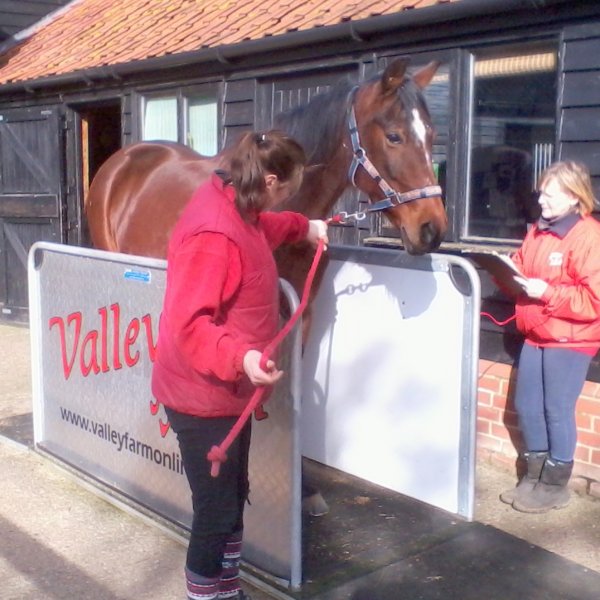
All the horses are regularly put over our weigh bridge to check their condition. Horses should lose weight during the winter to help prevent complications like EMS or laminitis, so we like to keep check this accurately. It is important for us to monitor the horses weights in order to administer the correct doses of de-wormer or any medications and help us to provide them with appropriate supplements to their diet. It also helps us to spot any sudden changes or weight which could be crucial in spotting medical problems early. This is much more accurate than a traditional weigh tape. It is available for hire for private horse owners.
Sleeping
Although it is well known that horses can snooze standing up, it is less well known that they need to lie down in order to get sufficient REM sleep. Sleep deprivation can cause many problems for horses as with humans, so we provide stables that are big enough for them to lay down and bedding which encourages them lay down to rest. If a horse feels relaxed, safe and comfortable he will lay down to rest and to sleep. It is not unusual to find our horses relaxing, laying in the stables, or sometimes laying flat out and snoring their heads off or dreaming. Horses don't sleep through the night, but tend to have a few naps spread throughout 24 hours. Often the whole herd can be found sleeping in the pasture during the early hours of the mornings, maybe with just one or two horses on century duty. This can be a real treat for visiting campers to see, if they get up early enough.
Little extras
We recognise that horses just like people are all individuals. They have different needs, different strengths and weaknesses and different personalities and enjoy different activities. We understand that their needs may change over time.
In addition to the 3 F's welfare model (Friendship, Forage and freedom) some models include a 4th F (Fortitude). This puts the emphasis on us, as care-givers to provide a training and living environment which empowers our horses to be brave, calm and able to not only cope with what life throws a them, but to feel that their life is worth living. To help with this we are able to offer our horses a certain amount of choice in certain areas, for example we often let them choose their preferred stable. We have a variety of different styles of stable blocks. Some are quieter than others, some are more open. Some horses prefer to be in a quiet space and others enjoy lots of fuss. Some are more sociable than others. We observe their behaviour carefully to see if they are happy being next to certain horses or not, and if not we rearrange things. We carefully monitor their living arrangements, diet, weight, mental health, physical health, training and work to ensure we are able to cater their individual needs. We provide continuous training, with a variety of obstacles to help each horse grow their window of tolerance and become curious and brave as well as physically stronger.
Clipping
Some of our horses are clipped (Have their hair cut short) for health reasons. Some breeds of horse grow winter coats suited to surviving in much colder climates than the UK which means they can be subject to overheating. Clipping can also make it easier to groom horses more thoroughly and administer medication to the skin if required.
Our clipped horses benefit from our electric grooming machine in addition to the usual hand grooming. The machine not only cleans their coats, it massages them too.
We believe that horses should not have the hair from the insides of their ears removed as it protects them from wind and rain. We also believe that like cats, horses require their whiskers.You may be shocked to know that a horses whiskers (vibrissae) are actually an incredibly important sense to them. The whiskers around the eyes and muzzle are extremely sensitive and have a rich nerve supply. Each whisker has a region of the sensory cortex (in the brain) dedicated to it . ‘This dedication of a portion of the cortex to each vibrissa indicates that they must be extremely important sensory instruments which should not be removed for cosmetic purposes’ (McGreevy, 2004:51).
Health & Regular Care
We have regular visits from our vet, dentist and other equine professionals. We work closely with our farrier to provide the best hoof care for individual horses, and as a result some of our horses do not wear shoes. We monitor and record how much exercise every horse is getting on a daily basis, in order that we can ensure that it is appropriate for that individuals needs. We carry out regular tack checks and work closely with saddle fitters, vets and physios to help keep the horses as comfortable as possible. We do everything we can to prevent injuries and to manage/eliminate health conditions, pain and discomfort.
Riders
We impose weight limits for riders. These are individual to each horse, but also variable depending on the age, health and fitness of the horse in question, and the level of work expected. We take into consideration more than just weight and height so we can carefully match personality and ability to ensure we can do our best to keep our horses happy as well as allow riders to progress their skills and their fitness. For the safety of horses and riders, we have a code of conduct which applies to riders and visitors to the yard. It can be found here Horse Riders Code of Conduct | Valley Farm
Rider Wellbeing
We want to create a community where everyone can thrive. We understand that horses are extremely good at picking up on human emotions so we provide education to help riders learn to regulate their emotions, and promote a positive mindset. We work with the British Horse Society to run their Changing Lives Through Horses initiative to help children and young people develop life skills.
If you need help you can always talk to us but you may also find the resources on this page useful https://pcuk.org/wellbeing-2
British Equestrian have created a useful toolkit to help promote mental wellbeing through the power of equestrian activities, supporting us all to better understand and look after one another. Click here to find out more.
Simulators
We encourage the use of our simulators to help riders enhance their skills regarding balance, coordination, application of cues. To help them gain confidence and develop musculoskeletal strength. Learn more about the benefits of riding simulators on our simulator page https://www.valleyfarm.co.uk/content/equisimilators
Education
Being a riding school and visitor centre we are in a position to be able to educate horse riders and the general public about best practices. We provide lots of free information and educational material around the yards. We also aim to provide education for the wider public through our social media platforms. Where possible we aim to educate participants to use calm and sympathetic methods in their riding and handling of the horses. We try to educate about animal welfare and the importance of partnership. Compassionate, patient riders with a positive attitude and self awareness are best for horses, so we encourage this through our coaching.
Training
We want our horses to be willing, cooperative participants in any activities we do with them so our preferred training methods help to inspire and empower the horses to be the best they can be. Our youngstock, and horses donated to us or purchased are assessed and trained using scientific evidence based, combined reinforcement, operant conditioning, shaping plans and natural horsemanship methods. We recommend following the International Society for Equitation Science 10 Principles for Horse Training. Many of our horses are trained for more than one discipline. For example western riding, vaulting, carriage driving, or side saddle in addition to dressage and jumping. This adds variety to their lives and helps to prevent boredom. It also allows us to see where an individual horse's strengths and interests lie, so that we are able to chose work/exercise to suit the individual character of each animal. It is interesting for the horses to learn new things, so we continue their education, and give them plenty of opportunity to try out new experiences to enrich their lives. We offer continuous training for our staff, and take part in CPD ourselves, so why wouldn't we want to do the same for our horses?
Rescues and Rehabs
When we have sufficient resources, we are able to take in horses or ponies in need, in order to give them better opportunities in their lives. Often horses who have been exhibiting behavioural problems usually settle very well and begin to thrive when they come into our herd environment. The most we have taken in during one year was six in 2019. Two of these were fat scored 1.5. Due to family problems three were unable to remain in their homes. 3 we collected after their loving owner died and they were left in a field. Generally we bring them all around to be useful working horses who can join our team in the riding school or go into our livery yard on our loan scheme. In 2025 we welcomed 2 horses from the BHS second chance project. You can find more about it here BHS Second Chance Project It is very rewarding for us and for our clients to see these horses grow in confidence.
It must be understood that our horses come from diverse backgrounds and some issues take longer to rehab than others. It is important to us to take the time it takes rather than force shortcuts. We carefully monitor the behaviour of our horses to ensure that undesired behaviours decrease over time and to help us provide the best possible care, management and training plan for the individual. Some of our horses are very elderly. We feel that if they are happy to continue taking part in activities it is better for them both mentally and physically than taking early retirement. We understand the balance of salient positive and negative experiences and the importance of making decisions regarding quality of life. Some of our horses do have health issues which we monitor closely. If you are ever worried about one of our horses, please do ask us about their condition.
You can see more images of our horses, throughout the seasons, relaxing when they are not at work by clicking through the photos at the top or please visit our photo album on Facebook called Horses in the Fields with this link (20+) Facebook Photos
The Charter for Horse Welfare
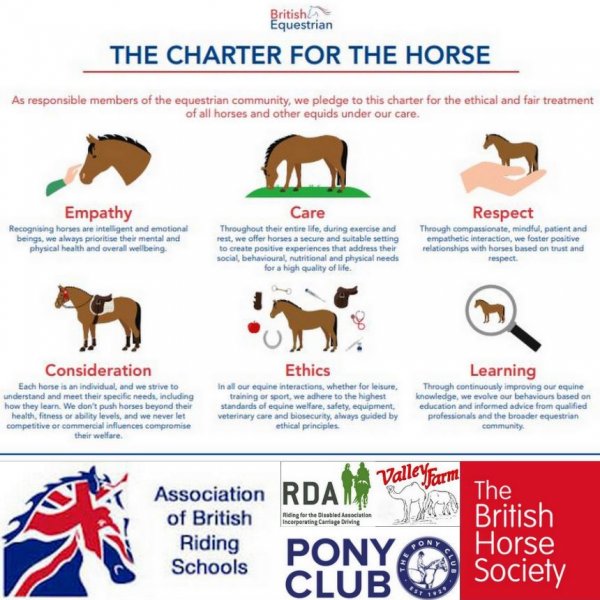
We believe that the physical environment and training practices should enable horses to thrive, not just survive so, in 2024 we were delighted to see The charter developed to be adopted across the UK equine industry industry. Under six headings, of empathy, care, respect, consideration, ethics and learning, the charter sets out what must be done to ensure all our horses’ needs are met. We agree with BEF chief executive Jim Eyre, who said: “In our privileged position to live and work with horses, we must champion the very best standards and excellence levels for their welfare – it’s non-negotiable, and the support for bringing this overarching Charter for the Horse to fruition has been outstanding". Equine welfare involves the physical, psychological, social and environmental wellbeing of the horse, and all horses involved in sport and leisure activities should be able to live a good life.
Learn More
If you are interested in learning more about the five freedoms model and the more recent evolution of the five domains for horse welfare you can check out these websites The 5 Domains of animal welfare - World Horse Welfare , Models of Horse Welfare | Pony Club Australia
You can find more information about the Charter for Horse Welfare here Charter for the Horse: a unified approach to safeguarding our equines and equids - News - British Equestrian and also see the poster by scrolling through our photos at the top of this page.
Find out more about training principles in equitation here ISES 10 Training Principles
Learn more about the 3 F's The 3Fs - Friends, forage and freedom - World Horse Welfare
To view The FEI Equine Welfare Strategy Action Plan FEI Welfare Strategy
The British Horse Society provide lots of useful free information for anyone who is thinking about purchasing a horse or already owns one. https://www.bhs.org.uk/horse-care-and-welfare/
For those who want to learn more about equine learning and behaviour, horse care and stable management or who wish to learn more about training horses for a specific skill such as carriage driving or vaulting, western riding, horse boarding or side saddle you can book private lessons to focus on details of individual topics or you can join a group such as our ground work and agility group which gives a more general overview of how to train horses for desired behaviours.
If you have a welfare concern
If you have a concern about one of our animals, please speak to a senior member of staff as soon as possible so that we can do something to rectify the situation. If you have a concern about the welfare of a horse in the UK you can contact the British Horse Society Welfare team Report a welfare concern
And finally...
We have been championing horse welfare practices for decades, and are very pleased to see that it is now becoming more wide spread. Visitors can see our herds interacting every day. Overnight guests love to watch the horses being gathered in the mornings. The usual way of fetching the horses in is to open the field gates and call loudly. This produces a herd reaction to race up the tracks to the stables for breakfast. Occasionally some sleepy horse will be flat out in the early morning sunshine and miss the breakfast call. All of a sudden they become aware of the fact the herd has left and they wake up to an empty field. They jump to their feet and race to catch up with the retreating herd.
It is so lovely to see the horses interact as a herd. Happy horses make it an enjoyable place for us, for our visitors and most of all for the animals.
Our animals are dependent on us to provide the lifestyle they require as best we can, within the nature of the business we run, to provide for their emotional well-being as well as their physical care. Unbeknown to them, we work hard to achieve this, and to educate other people, to help benefit more horses.
With a little effort and a lot of education we can create an environment where animals can not only survive but they can thrive. We hope that by setting an example others will be inspired to follow.
updated June 2026