This page includes information about: Polocrosse, Bareback, Lunge Lessons, Hacking, Mounted games, Trick riding.
Scroll down to find what you are looking for.
POLOCROSSE
Polocrosse is a fast-paced equestrian team sport that blends elements of polo, lacrosse, and netball into one thrilling game. Riders use a lightweight racket with a netted head to pick up, catch, carry, and throw a rubber ball. The aim is to pass the ball between teammates and score goals by throwing it through the opposing team’s goalposts. Matches are typically played in short, energetic chukkas, and the sport places a strong emphasis on teamwork, horsemanship, and fair play. Unlike polo, all players stay on the field together, making it highly dynamic and accessible for both riders and spectators. One of polocrosse’s biggest draws is its inclusivity. It’s played by men, women, and juniors, often in mixed-gender teams. Faster breeds, such as Thoroughbreds, Quarter horses and Australian Stock horses are popular in competition, but you can start with any breed of horse.
Learning to play is great for improving horsemanship and riding skills. The sport requires high levels of responsiveness, with horses needing to stop, turn and accelerate quickly. It helps to develop transferable skills such as balance, core strength and coordination in the saddle as well as the ability to ride with one hand. It is great for developing hand eye coordination and encouraging cooperation with team mates. Because the equipment is relatively simple and the rules prioritise safety, polocrosse is often seen as a welcoming entry point into competitive equestrian sport. Clubs tend to be very social, with a strong community feel, and many players get involved as much for the camaraderie as for the competition.
The game was developed in the 1930s to help improve riding skills. The International Polocrosse Council (IPC) was formed in Australia in 1976. It has since become a truly international sport with a world cup occurring every 4 years. It is popular with many Pony Clubs. In the UK, polocrosse is governed by The Polocrosse Association of Great Britain (PAGB). PAGB provides information on rules, fixtures, coaching, and affiliated clubs across the country. Their website also lists “have-a-go” days and training opportunities, which are ideal for newcomers. You can find additional insights, photos, and updates through UK polocrosse clubs on social media, as well as by attending events at agricultural shows and equestrian festivals, where the sport is often demonstrated.
At Valley Farm we often include polocrosse as an activity during our pony days and summer camps.
We can provide taster sessions for Pony Clubs, Riding clubs and groups either with their own horses or with ours.
__
BAREBACK
We have a selection of bareback pads. Some with stirrups and some without. A bareback pad provides the feel of bareback while making the horse slightly less slippery and helps to keep the rider cleaner.
Riding bareback removes the physical barrier of the saddle making it easier for the rider to feel the movement of the back and shoulders along with making it easier to notice the timing of their footfalls. It also makes it much easier to feel the horses breathing rate and muscle tension, meaning a rider can more easily learn to sense how their horse is feeling. The warmth of the horse can be felt, and sometimes so can the heartbeat, which can be a good way to foster connection with the horse.
Bareback riding can be helpful for improving core strength and balance, as there is nothing to hold on to. It is a great way to encourage riders to slow down and really focus on technique.
It is harder work for the rider as the hips need to be able to stretch wider and the balance needs to be excellent at all times. It is also harder for the horse because the riders weight is not distributed over the back in the same way as it would be with a saddle. For this reason, bareback sessions should be kept short.
If you wish to ride bareback as part of your lesson, please ask you coach. It can be a really fun thing to do in warmer weather as part of the cool down at the end of the lesson.
-
LUNGE LESSONS
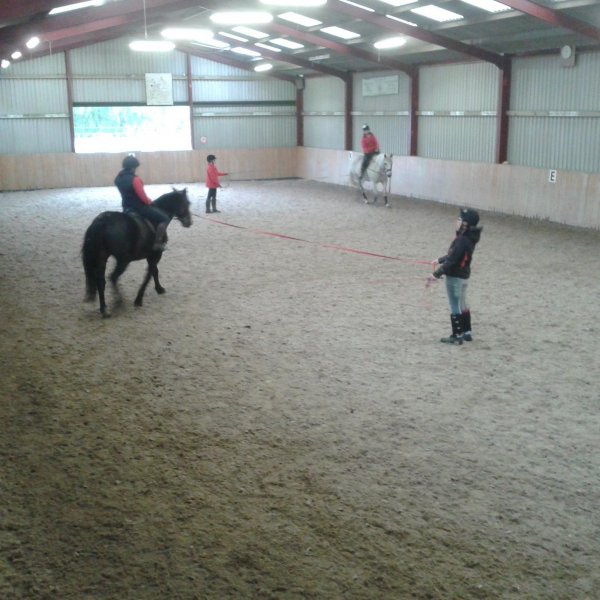
Lunge lessons are specialised, training sessions where the coach controls the horse on a long line, allowing the rider to focus solely on their balance, posture, and seat without needing to steer or control the speed. Lessons on the lunge are the best way to develop a secure connection with the horse and are something that riders of all abilities should regularly return to in order to develop an independent seat, improve core strength and coordination.
Key Reasons to Take Lunge Lessons:
Lunge Lessons can be undertaken with a bareback pad, western saddle, side saddle, vaulting handles or with regular tack.
DYK Riders that enter the Spanish Riding School in Vienna, (one of the most prestigious riding schools in the world) are often worked on the lunge line without reins or stirrups, for up to two years. This method permanently embeds an educated independent seat as well as independent hands and legs to the riders. When riders start their riding careers with quality training on the lunge, they develop an elegant and effective seat through their entire riding lives.
-
HACKING
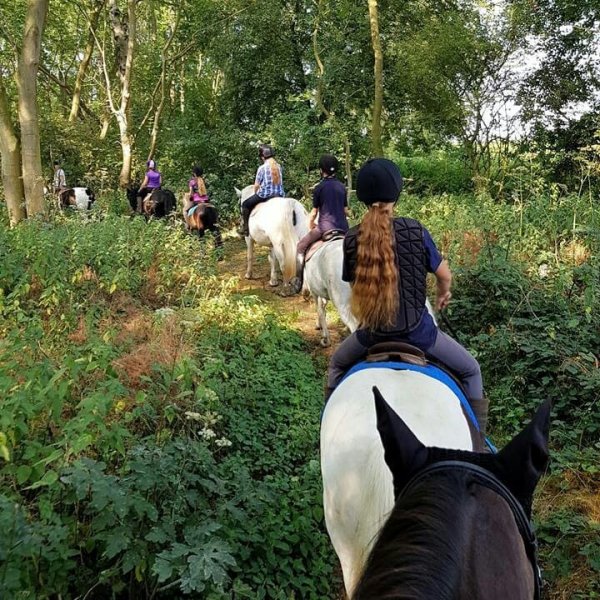
Hacking means riding your horse outside an arena on trails or roads. It is excellent for improving both horse and rider's mental wellbeing and physical fitness. It provides mental stimulation for the horse, builds confidence, improves cardiovascular health, and offers a fun or relaxing alternative to arena work.
At Valley Farm we have several miles of tracks and trails around the farm and through our woodland allowing riders to experience riding over undulating terrain, while enjoying all that the beautiful countryside has to offer.
Hacks can be booked for private individuals or groups, or by joining a class, providing the standards of the riders are known and the riders safety can be assured. If we are unsure of your riding ability you will be assessed in the arena first and may be offered a lesson instead. Hacks are not recommended for complete novices.
If you book a hack you will be escorted by a coach, also on a horse who will open and close gates for you if required and will help to keep you safe. Hacks can either be educational or a chance to relax and unwind. The speed will be dictated by the ability of the rider(s).
Hacks usually last for one hour, and do not include any road work unless requested. Riders requiring to practice for their BHS Ride Safe Award or Road Safety assessments can be escorted on the roads.
Lead rein hacks or walk outs. These are suitable for children who have never ridden before and can be a great way to introduce young children to horse-riding. The child will be partnered with a suitable pony. The coach will teach them how to mount, sit correctly, hold the reins if applicable and then lead them round the farm. The route will usually include passing the goats, alpacas or cows. This allows children to practice their balance and get used to the movement of a horse/pony with out the pressure of formal lessons.
-
MOUNTED GAMES
Mounted games is a fun, fast-paced team competition that significantly improves riding skills, balance, coordination, and confidence for all ages and abilities. It enhances the partnership with your horse through precise control, encourages teamwork and sportsmanship, and develops agility and speed. It consists of races and challenges that showcase the rider's athletic ability, agility, precision of riding and general horsemanship.
Mounted games are suitable for everyone, from beginners on lead reins to experienced, competitive riders.
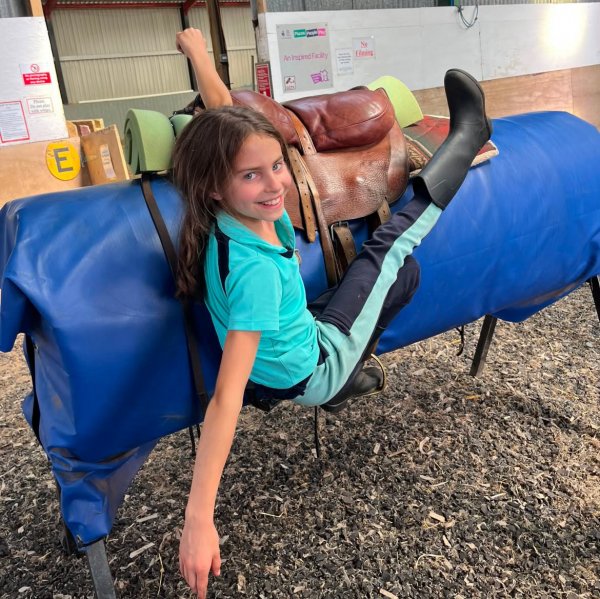
One aspect of mounted games requires to ability to vault (jump) on and off a moving horse. For those who have difficulty with this, we are able to provide step by step training with our static barrel horses and our trained vaulting horses. This can significantly speed up the learning process, especially for those just getting started with their own horses who do not want to run the risk of annoying their horse while learning.
Private lessons can be booked for individuals or for groups. Mounted games exercises are sometimes included as part of our regular group lessons and we sometimes host clinics or competitions. Keep an eye on our social media or contact us for more information.
__
TRICK RIDING
There are several different types of trick riding but essentially it is the art of performing acrobatic movements on horseback while the horse is in motion. Special trick riding saddles make this easier for the horse and the rider.
Trick riding has a rich history that dates back centuries. It was originally developed by cavalry soldiers, who practised mounting, dismounting, and moving around their horses quickly during battle. In the late 19th and early 20th centuries, trick riding became a popular feature of Wild West shows, where skilled performers amazed audiences with daring stunts and displays of horsemanship. Today, it has evolved into a respected equestrian discipline enjoyed by riders around the world for sport, performance, and personal development. Modern trick riding places a strong emphasis on correct technique, professional coaching, and the welfare of both horse and rider.
Learning to trick ride is about much more than performing exciting tricks. Riders develop strength, balance, coordination, and confidence as they learn to perform a variety of dynamic skills, from simple vaults and mounts to more advanced manoeuvres. It builds exceptional balance, body awareness, core strength, and confidence, while improving your overall riding ability. The training also develops trust and communication between horse and rider, creating a stronger partnership. Whether your goal is to improve your riding skills, challenge yourself in a new discipline, or simply have fun, trick riding offers a rewarding and unforgettable experience in a safe, structured environment.
Our static horses help riders safely learn and master the basics before moving onto a real horse on the lunge. You can find more information on our vaulting page. Private lessons can be booked or you may get the opportunity to try it during our pony days or Pony Camps.